
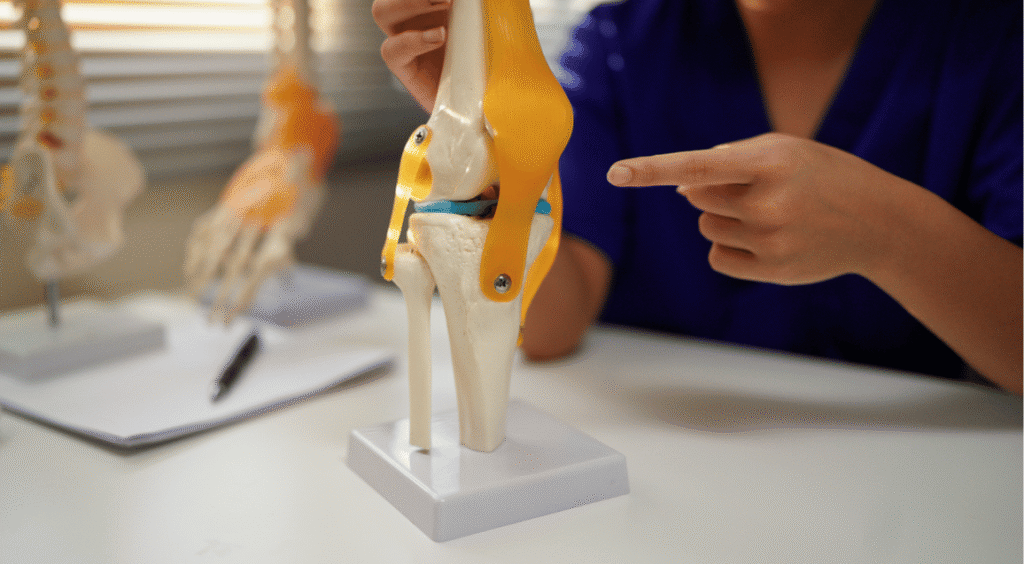
You have just undergone a successful ACL reconstruction. The surgeon is happy, and you are back in the comfort of your home. You might assume that the hard part is over, but the reality is that the next nine months are even more critical than the surgery itself. In the field of post ACL surgery physiotherapy, we see a recurring pattern: patients who had a perfect surgery but end up with a “loose” knee or a re-tear. This happens because of specific, avoidable mistakes made during the rehabilitation process.
When you invest in your recovery, you are not just trying to walk again; you are trying to ensure that your new graft lasts a lifetime. For residents of Nipania, accessing high-quality care is essential. Understanding these common pitfalls can be the difference between returning to your favorite sport and facing a second, much more complicated revision surgery. Here is a deep dive into the clinical errors that often lead to graft failure and how we address them through professional post ACL surgery physiotherapy in Indore.
Mistake 1: Ignoring the Biological Timeline of Ligamentization
The most dangerous mistake a patient can make is confusing “feeling good” with “being healed.” About six to eight weeks after surgery, your pain will likely subside. You might start walking normally and feel like you can run. However, biologically, your graft is at its weakest point during this time. This is known as the ligamentization phase. The tendon that was placed in your knee is currently dying off so that new ligament cells can grow in its place. This is a slow, biological process that cannot be rushed.
If you start high-impact activities like running or jumping during this window, you are putting massive shear forces on a soft, vulnerable graft. This leads to graft stretching. A stretched graft is essentially a failed graft; it results in a knee that feels unstable even if the ligament is technically still attached. Research published on PubMed highlights that the structural integrity of the graft changes significantly in the first few months, requiring strict activity modification.
In our clinic, we use a criteria-based approach rather than just a time-based one. We don’t let you run just because it has been three months. We only clear you for higher loads once your knee demonstrates specific strength and stability metrics. This scientific oversight is a cornerstone of effective post ACL surgery physiotherapy (in Indore). For more details on how we manage these early stages, visit our sports injury physiotherapy in Indore page.
Mistake 2: Neglecting the “First Two Weeks” Extension Goal
Many patients focus entirely on bending their knee after surgery. While bending is important, the most critical goal in the first fourteen days is getting the knee perfectly straight (full extension). If you do not regain full extension early on, it may lead to a permanent limp and chronic knee pain.
Biochemically, a knee that cannot straighten fully causes the quadriceps muscle to stay “shut down.” This is called arthrogenic muscle inhibition. Without full extension, you cannot walk with a normal gait, which puts abnormal stress on your hip and lower back. Professional post ACL surgery physiotherapy in Indore prioritizes passive extension exercises and patellar mobilizations from day one. We ensure that residents of Nipania who come to us do not leave their first week of rehab without a plan to achieve that vital zero-degree straightness.
If extension is ignored, it often results in a “cyclops lesion,” a painful ball of scar tissue that may require another surgery to remove. We prevent this by using manual therapy techniques and specific positioning protocols. This early attention to detail is what sets apart top-tier post ACL surgery physiotherapy in Indore from generic, unsupervised exercise programs. You can find more about our specialized knee protocols on our knee pain physiotherapy in Indore service page.
Mistake 3: Relying on Gym Strength Instead of Neuromuscular Control
A common misconception among athletes in Indore is that a big quadriceps muscle equals a safe knee. While muscle size is helpful, it is not the primary protector of your ACL. The ACL is protected by your brain’s ability to coordinate muscle firing—a concept called proprioception. If your brain doesn’t tell your hamstrings to fire at the exact millisecond your foot hits the ground, even the strongest muscle in the world won’t prevent a re-tear.
Many patients stop their ACL rehabilitation too early and transition to a regular gym. Standard gym machines like the leg press or leg extension work muscles in a single plane of motion. However, sports happen in three dimensions. Graft failure often occurs during pivoting or landing because the patient lacked the “neuromuscular control” to keep the knee in a safe position. Our rehab includes:
- Balance and Perturbation Training: We challenge your stability on uneven surfaces to force your brain to react.
- Reactive Drills: Teaching the knee to handle sudden changes in direction.
- Deceleration Training: Learning how to slow down and stop safely, which is when most injuries happen.
Without this specialized training, returning to sports is a high-risk gamble. According to the NHS, specialized rehabilitation that includes balance and coordination is essential for preventing re-injury. We ensure that every patient in our ACL rehabilitation program passes rigorous return-to-sport testing before they ever step back onto a competitive field.
The Hidden Danger of “Open Chain” Exercises Too Early
In a typical gym setting, people love the leg extension machine. However, for a fresh ACL graft, sitting on a machine and kicking your leg out with heavy weight can be disastrous. This is called an “Open Kinetic Chain” exercise. In the early months, this movement creates a “shear force” that pulls the tibia forward, directly stressing the healing graft. If done incorrectly or too soon, this can stretch the graft before it has a chance to mature.
At Dr Manisha Physiotherapy Clinic, we emphasize “Closed Kinetic Chain” exercises, like squats and lunges, where the foot is firmly planted on the ground. These movements are much safer because the compression of the joint helps protect the ligament. As you progress, we slowly and safely reintroduce other movements based on your unique healing rate. This level of clinical precision is why expert supervision is non-negotiable for a successful outcome.
Why Manual Therapy is a Missing Piece in Many Rehab Plans
Exercise is the foundation of recovery, but manual therapy is what ensures the joint is moving correctly. After surgery, the joint capsule and surrounding tissues become tight. If a therapist does not manually mobilize your kneecap (patella) and the soft tissues around the incision, you will develop “compensatory movements.” This means your body will find a “wrong” way to move to avoid pain.
These wrong movements eventually lead to hip pain, back pain, and excessive wear and tear on the new graft. Our post ACL surgery physiotherapy (in Indore) includes hands-on techniques to break down scar tissue and improve joint gliding. This ensures that when you do your exercises, you are doing them with perfect biomechanics. This combination of hands-on care and scientific exercise is why patients from Apollo DB City and Ocean Park choose our specialized services.
The Psychological Barrier: Kinesiophobia
One of the most overlooked factors in graft failure is the fear of movement (kinesiophobia). If you are afraid to put weight on your leg, you will move with a “stiff” strategy. This stiffness actually increases the risk of injury because it prevents the muscles from acting as natural shock absorbers. A significant part of post ACL surgery physiotherapy (in Indore) is building your confidence.
By gradually exposing you to more challenging tasks in a safe, clinical environment, we help you overcome the mental hurdle of the injury. We want you to stop thinking about your knee and start focusing on your performance. This psychological transition is just as important as the physical one. We work closely with our patients in Nipania to ensure they are mentally ready for the demands of their daily lives and sports.
Choosing Local Expertise in Nipania
Convenience plays a massive role in recovery success. ACL rehab requires multiple visits per week for several months. If you have to drive across Indore in heavy traffic, you are more likely to skip sessions. Having a world-class facility for post ACL surgery physiotherapy in Indore right in the Nipania area is a major benefit. It allows you to stay consistent with your sessions without the stress of a long commute.
Consistency is the number one predictor of a good outcome. When you are just minutes away from BCM Paradise or Grand Exotica, staying on track becomes much easier. We offer a high-standard clinical environment that matches the protocols used in major sports centers globally, ensuring you get the best possible care close to home.
“The surgery provides the structure, but the physiotherapy provides the function. Without a scientific rehab plan, even the best surgery can fail.” – Dr. Manisha Mishra (MPT).
Conclusion: Your Road to a Successful Recovery
A failed ACL graft is a physical and emotional burden that no one should have to face twice. By avoiding these common mistakes—ignoring the biological timeline, neglecting early extension, and over-relying on basic gym strength—you can protect your surgical investment. Professional post ACL surgery physiotherapy in Indore is the bridge between your surgery and your return to a full, active life. If you are serious about your knee health, ensure your recovery is guided by science, data, and expert musculoskeletal care. Your journey back to the field starts with a single, correctly guided step.
Frequently Asked Questions
1. Can a graft fail even if I follow my exercises?
While rare, biological failure can happen. However, the vast majority of failures are due to improper loading, poor biomechanics, or returning to sports too early without meeting strength criteria.
2. How do I know if I have regained full extension?
When sitting with your legs out straight, your knee should be able to touch the surface completely, and you should be able to lift your heel off the ground while keeping the knee locked.
3. Is it normal for my knee to feel “weird” for a year?
Yes. It takes about 12 to 18 months for the nerves to fully settle and the graft to complete its transformation. Consistent post ACL surgery physiotherapy (in Indore) helps manage these sensations.
4. Why is my hamstring so weak after surgery?
If a hamstring graft was used, the donor site needs its own specific rehabilitation. We focus on progressive loading to help that area recover without overstretching the new ACL.
5. Can I use a brace instead of doing physiotherapy?
No. A brace is a temporary support; it does not build muscle or retrain your brain. Physiotherapy is the only way to restore the internal stability of the joint.
6. What is the most important exercise in the first month?
Quadriceps sets and straight leg raises are vital for maintaining muscle activation while protecting the healing incision sites.
7. I live in Ocean Park; how close is your clinic?
Our center is located in Nipania at Divyansh Square 2, which is just a short 5-minute drive from Ocean Park and Apollo DB City.
8. When can I start driving again?
This depends on which leg was operated on and the type of vehicle. Generally, for the right leg, we recommend waiting until you have enough braking strength, usually around 6 weeks.
9. How do you measure my strength symmetry?
We use functional tests like the single-leg hop for distance and, in some cases, specialized dynamometers to measure the exact poundage your muscles can produce.
10. Does insurance cover my rehab sessions?
Most major insurance plans in Indore cover post-operative physiotherapy. We recommend checking your specific policy or speaking with our administrative team for guidance.
Medical Disclaimer: This article is for informational purposes only and does not replace professional medical advice. ACL recovery is a specialized process. Always consult your orthopedic surgeon and a qualified physiotherapist before starting or changing any exercise program. If you experience sudden instability, severe pain, or a “pop,” seek medical attention immediately.