
Nobody warns you properly.
They tell you about morning sickness, about cravings, about the joy of the first kick. They throw a baby shower. They prepare the nursery. Everyone has advice about the baby – how to feed, how to swaddle, how to sleep-train.
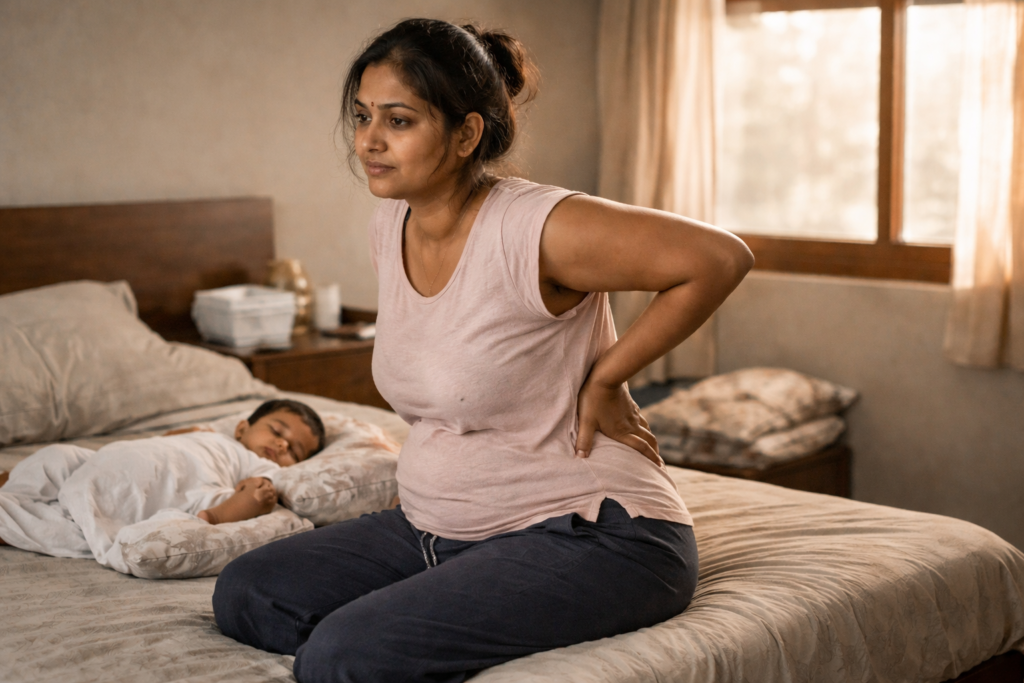
But nobody sits you down and talks about what happens to your body. The back pain that started in the second trimester and never really left. The belly that still looks pregnant four months after delivery. The embarrassing little leaks when you cough or laugh too hard. The ache in your pelvis every time you climb stairs. The stiffness in your shoulders from holding and feeding the baby for hours.
You are told these things are “normal.” That they will “settle with time.” That this is just “part of being a mother.”
Here is the truth: these things are common, but they are not something you simply have to live with. Every single one of them can be treated, improved, and often completely resolved – with the right kind of care. That care is called women’s health physiotherapy in Indore, and it exists specifically for you.
What Exactly Is Women’s Health Physiotherapy and Why Should You Care?
Women’s health physiotherapy is a specialized branch of physiotherapy focused entirely on the conditions that affect women during pregnancy, after childbirth, and across different life stages. It covers everything from pregnancy-related back pain and pelvic girdle pain to postpartum recovery, pelvic floor rehabilitation, diastasis recti treatment, and post-C-section healing.
In countries like Australia, the UK, and Canada, seeing a women’s health physiotherapist after delivery is considered as standard as seeing your gynaecologist for a postpartum checkup. The NHS recommends postnatal physiotherapy for pelvic floor strengthening, abdominal recovery, and management of incontinence after childbirth. It is not a luxury. It is healthcare.
In Indore, this awareness is still growing. Most women do not know that a physiotherapist can help them during pregnancy. They do not know that the belly gap they are struggling with has a name (diastasis recti) and a treatment. They do not know that leaking urine after delivery is treatable – not just something to quietly manage with pads forever.
This article is for every woman in Indore who has ever wondered: “Is this normal? And can anyone actually help me?”
During Pregnancy: When Your Body Asks for Help and Nobody Listens
Pregnancy is a beautiful experience, but let us be honest about what it does to your musculoskeletal system. Over nine months, your body undergoes changes that would be considered significant injuries in any other context.
Lower Back Pain – The Uninvited Guest That Stays the Longest
Research suggests that 50% to 80% of pregnant women experience back pain at some point during their pregnancy. Your growing belly shifts your centre of gravity forward, increasing the curve in your lower back. The ligaments throughout your pelvis soften due to the hormone relaxin, making your joints less stable. Your core muscles stretch and weaken as the baby grows. All of this adds up to persistent, sometimes debilitating lower back pain.
Most women in Indore are told to just “bear with it” or take rest. But prenatal physiotherapy can safely and significantly reduce this pain through specific exercises, posture correction, pelvic support belts, and gentle manual therapy techniques that are completely safe during pregnancy.
Pelvic Girdle Pain – The Sharp Pain Nobody Explains
If you feel pain at the front of your pelvis (over the pubic bone), at the back near your sacroiliac joints, or deep in your groin when you walk, climb stairs, turn in bed, or stand on one leg – you likely have pelvic girdle pain. It affects roughly 1 in 5 pregnant women and can be severe enough to require crutches in extreme cases.
This is not “normal pregnancy discomfort.” It is a treatable condition. A physiotherapist trained in women’s health can teach you specific stabilization exercises, modify your daily activities to reduce stress on the pelvis, and use manual therapy techniques to ease the joint dysfunction.
What Safe Exercise During Pregnancy Actually Looks Like
There is so much confusion about exercise during pregnancy. Some women stop all physical activity out of fear. Others continue their pre-pregnancy workout without modification. Both approaches can cause problems.
Women’s health physiotherapy in Indore provides trimester-specific exercise guidance that keeps you active and strong while protecting your baby:
- First trimester – Focus on breathing techniques, gentle core engagement, and maintaining your current fitness level. Avoid high-impact activities and exercises lying flat on your back after 16 weeks.
- Second trimester – Pelvic floor strengthening begins in earnest. Posture correction exercises become important as your belly grows. Modified squats, walking programs, and prenatal yoga under guidance are excellent choices.
- Third trimester – Birth preparation exercises including perineal stretching, optimal fetal positioning, and labour breathing techniques. Pain management strategies for the lower back and pelvis become a priority.
After Delivery: The Recovery Nobody Plans For
You have spent nine months preparing for the birth. You have read about labour, chosen your hospital, packed your bag. But very few women in Indore plan for what comes after. And what comes after – the physical recovery from pregnancy and childbirth – can take months if not guided properly.
The “Mummy Tummy” That Will Not Go Away – Diastasis Recti
During pregnancy, the two bands of abdominal muscles (rectus abdominis) separate to make room for the growing baby. This separation is called diastasis recti. Studies show that 100% of women have some degree of this separation by the end of pregnancy, and approximately 39% still have a significant gap at 6 months postpartum.
If you notice a visible bulge or ridge running down the centre of your belly when you sit up from lying down, or if your tummy still looks pregnant months after delivery, you very likely have diastasis recti. Crunches and planks – the exercises most women try first – can actually make this worse.
The correct approach is targeted deep core activation exercises that bring the muscles back together gradually. A women’s health physiotherapist will assess the width and depth of your separation and prescribe a specific progression of exercises that safely closes the gap without straining the connective tissue further.
Pelvic Floor Weakness – The Problem Women Suffer in Silence
Your pelvic floor is a group of muscles that sit like a hammock at the base of your pelvis, supporting your bladder, uterus, and bowel. During pregnancy, the weight of your growing baby puts enormous pressure on these muscles. During vaginal delivery, they stretch further – sometimes to the point of injury.
The result? Many women experience urinary incontinence (leaking urine when they cough, sneeze, laugh, or exercise), a feeling of heaviness or pressure in the vagina (possible prolapse), reduced sensation during intimacy, or difficulty controlling bowel movements.
These are incredibly common problems – estimated to affect 1 in 3 women after childbirth. Yet most women in Indore never seek help because they are embarrassed, or because they believe it is an unavoidable consequence of motherhood. It is not. Pelvic floor physiotherapy is highly effective, and it starts with learning how to correctly activate and strengthen these muscles under professional guidance.
Post C-Section Recovery – More Than Just Waiting for the Scar to Heal
A caesarean section is major abdominal surgery. The surgeon cuts through skin, fat, fascia, muscle layers, and the uterus itself. Recovery involves not just wound healing but rehabilitation of the entire abdominal wall, core stability retraining, scar tissue management, and gradual return to normal activities.
Many women in Indore are simply told “rest for 40 days” after a C-section and given no structured rehabilitation plan. This leads to persistent weakness, poor posture from guarding the scar, back pain from compensatory movement patterns, and delayed return to functional activities.
A physiotherapist guides post-C-section recovery through gentle breathing exercises in the first week, progressive core activation starting around 2 to 3 weeks, scar mobilization once the incision has healed, and structured strengthening from 6 weeks onward. The Royal Women’s Hospital in Australia lists physiotherapy as a core service for postnatal recovery, including specific rehabilitation after caesarean delivery.
The Conversation Indore Needs to Have About Postpartum Bodies
There is a cultural expectation in India that a new mother should be focused entirely on the baby. Her own body, her own pain, her own recovery – these take a back seat. Add to this the joint family dynamics where well-meaning relatives discourage exercise (“You just had a baby, take rest!”) and the result is millions of women whose bodies never fully recover from pregnancy.
Let us be clear about something. Caring for yourself is not selfish. A mother who is in pain, who cannot pick up her child without her back hurting, who avoids going out because she is worried about leaking urine, who feels disconnected from her body – that mother cannot give her best to her family.
Recovery is not vanity. It is function. It is the ability to lift your toddler without wincing. To climb stairs without pelvic pain. To laugh freely without worrying about leaks. To feel strong and capable in your own body again.
That is what women’s health physiotherapy in Indore gives you back.
What a Women’s Health Physiotherapy Session Looks Like with Dr Manisha
If you have never been to a physiotherapist for pregnancy or postpartum issues, you might feel unsure about what to expect. Here is a straightforward walkthrough of the process at Dr Manisha Mishra’s clinic:
The Assessment (First Session – 45 to 60 minutes):
Dr Manisha will begin by understanding your complete pregnancy and delivery history – the type of delivery (vaginal or C-section), any complications, your current symptoms, and your recovery goals. The physical assessment includes checking your posture, testing your core and pelvic floor activation, assessing the width of any abdominal separation (diastasis recti), and evaluating your lower back and pelvic joint function. Everything is done in a private, comfortable setting with full sensitivity to your comfort.
The Treatment Plan:
Based on the assessment, you receive a personalized treatment plan that may include:
- Pelvic floor activation and strengthening exercises (taught with clear guidance on how to feel whether you are doing them correctly)
- Deep core retraining exercises specifically designed for diastasis recti
- Manual therapy for lower back pain, pelvic girdle pain, or neck and shoulder tension from breastfeeding postures
- Scar tissue mobilization for C-section scars (once healed)
- Posture correction and ergonomic guidance for feeding, carrying, and daily baby care activities
- Gradual return-to-exercise program tailored to your fitness level and recovery stage
Why Dr Manisha specifically:
Dr Manisha Mishra holds an MPT in Musculoskeletal Physiotherapy from Maharashtra University of Health Sciences (Gold Medalist) and has dedicated clinical training in women’s health conditions. She is also a certified expert in dry needling and kinesio taping – advanced techniques that are particularly useful for treating pregnancy-related muscle pain and providing support to the postpartum abdominal wall. Importantly, she treats every patient one-on-one in a private setting, which matters enormously when dealing with intimate women’s health concerns.
5 Postpartum Exercises Every New Mom in Indore Can Start at Home
These exercises are safe for most women starting from 6 weeks after a vaginal delivery (or 8 weeks after C-section, once cleared by your doctor). Start gently and build up gradually. Stop if anything causes pain.
1. Diaphragmatic Breathing with Pelvic Floor Activation
Lie on your back with knees bent. Place one hand on your chest and one on your belly. Breathe in through your nose, letting your belly rise gently. As you breathe out slowly through your mouth, gently lift your pelvic floor (imagine stopping the flow of urine mid-stream) and draw your lower belly inward. Hold for 3 to 5 seconds. Release and repeat 10 times. This is the foundation of everything else.
2. Heel Slides
Lie on your back with knees bent. Activate your deep core and pelvic floor as you breathe out, then slowly slide one heel along the floor until the leg is straight. Slide it back. Repeat 10 times on each side. This trains your deep core to stabilize while your legs move.
3. Modified Bridge
Lie on your back with knees bent and feet flat. Engage your pelvic floor, then lift your hips off the floor, squeezing your glutes at the top. Hold for 5 seconds. Lower slowly. Repeat 10 times. This strengthens your glutes, core, and pelvic floor together.
4. Wall Push-Ups
Stand an arm’s length from a wall. Place your hands on the wall at shoulder height. Slowly bend your elbows to bring your chest toward the wall, then push back. Repeat 10 times. This rebuilds upper body strength safely without putting pressure on your abdominal wall.
5. Seated Posture Resets
While feeding or sitting, consciously roll your shoulders back and down, pull your chin slightly in, and sit tall through your spine. Hold for 10 seconds. Repeat throughout the day. This counteracts the rounded “feeding posture” that causes neck and upper back pain in almost every new mother.
10 Most Asked Questions About Women’s Health Physiotherapy in Indore
1. When is it safe to start physiotherapy after a normal delivery?
Gentle pelvic floor exercises and breathing can begin within the first few days after delivery. Structured physiotherapy sessions are generally safe from 6 weeks postpartum, once your doctor gives clearance. If you had stitches, wait until they have healed before starting any active exercises.
2. When can I start physiotherapy after a C-section?
Gentle breathing exercises and ankle movements can begin within 24 to 48 hours after surgery. More structured core and pelvic floor work typically begins at 6 to 8 weeks, once the incision has healed and your obstetrician clears you. Scar mobilization is usually started around 8 to 12 weeks when the tissue has matured enough to handle gentle pressure.
3. I had my baby 2 years ago and still have back pain – is it too late for physiotherapy?
It is never too late. Many women seek women’s health physiotherapy months or even years after delivery and still get excellent results. The sooner you start, the faster the recovery, but your body can always be strengthened and retrained regardless of how much time has passed.
4. Is it normal to leak urine when I sneeze or jump after having a baby?
It is extremely common – affecting roughly 1 in 3 women after childbirth – but it is not something you should accept as permanent. Pelvic floor physiotherapy has a very high success rate for treating stress urinary incontinence. Most women see significant improvement within 6 to 12 weeks of consistent pelvic floor training.
5. How do I know if I have diastasis recti?
Lie on your back with knees bent. Place your fingers horizontally just above your belly button. Slowly lift your head and shoulders off the floor (like a small crunch). If you feel a gap of two or more finger-widths between the muscle bands, you likely have diastasis recti. A physiotherapist can measure this more precisely and determine the depth and functional impact of the separation.
6. Will doing crunches fix my postpartum belly?
No. In fact, traditional crunches and sit-ups can make diastasis recti worse by increasing pressure on the already-weakened connective tissue between the abdominal muscles. The correct approach is deep core activation exercises that train the transverse abdominis (the deepest core muscle) to pull the muscles back together before progressing to more challenging exercises.
7. Can physiotherapy help with pain during intimacy after delivery?
Yes. Pain during intercourse after childbirth can result from pelvic floor tightness, scar tissue from episiotomy or tearing, or hormonal changes (especially during breastfeeding). A women’s health physiotherapist can assess the pelvic floor, provide techniques to release tight areas, guide scar desensitization if needed, and prescribe exercises that restore normal function. This is more common than most women realize and is absolutely treatable.
8. Is it safe to exercise during pregnancy?
For most healthy pregnancies, exercise is not only safe but strongly recommended. Regular physical activity during pregnancy reduces back pain, improves sleep, prevents excessive weight gain, and may even lead to shorter labour. The key is doing the right exercises at the right intensity for each trimester, which is exactly what a prenatal physiotherapy program provides.
9. Do I need a female physiotherapist for women’s health issues?
Many women feel more comfortable with a female physiotherapist when dealing with pregnancy, postpartum, and pelvic health concerns. Dr Manisha Mishra provides all women’s health physiotherapy services herself in a private, one-on-one setting, ensuring comfort, privacy, and sensitivity throughout the assessment and treatment process.
10. How many sessions of postpartum physiotherapy will I need?
This varies based on the specific conditions being treated. For general postpartum recovery (core, pelvic floor, posture), most women benefit from 6 to 10 sessions over 8 to 12 weeks, combined with a daily home exercise program. Women with significant diastasis recti, pelvic floor dysfunction, or post-C-section complications may need a longer course. Your physiotherapist will set clear milestones and track your progress at each visit.