
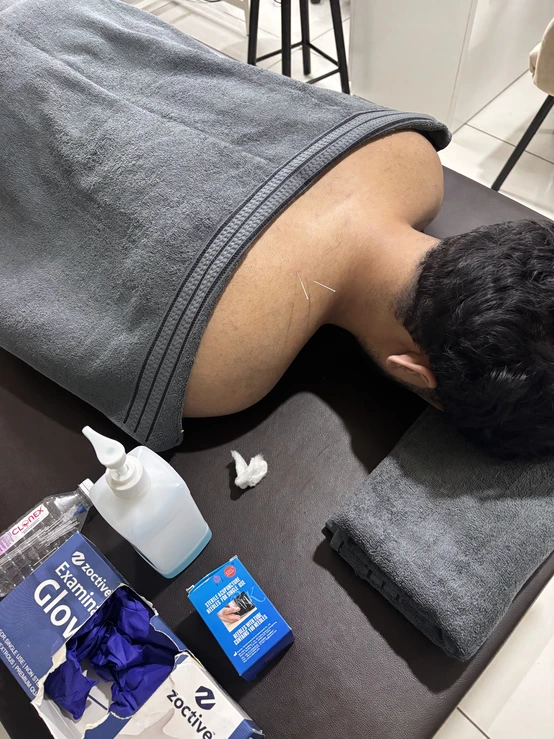
You have stretched it, massaged it, used a foam roller on it, and the same stubborn knot in your shoulder or lower back keeps coming back within a day. This is one of the most common reasons patients start looking into dry needling therapy in Indore, since it works on muscle tissue in a way that surface techniques like massage often cannot reach.
Dry needling has grown quickly in popularity over the past decade, but it is also frequently misunderstood, sometimes confused with acupuncture, sometimes dismissed as unproven, and sometimes sought out without patients realizing how much the practitioner’s training actually matters. This guide explains what dry needling is, how it works, what conditions it helps with, and why choosing a properly certified therapist for dry needling therapy in Indore is not a minor detail but a genuine safety consideration.
What Is Dry Needling?
According to the Cleveland Clinic, dry needling is a treatment used for pain and movement issues associated with myofascial trigger points, in which a provider inserts thin needles into or near the trigger point, stimulating the muscle so it contracts or twitches, which helps relieve pain and improve range of motion.
The term “dry” refers to the fact that nothing is injected through the needle, unlike a wet needling technique that might deliver medication. This is one of the most important things to understand before starting dry needling therapy in Indore: the needle itself is the treatment, working through a direct mechanical and neurological effect on the muscle, not through any substance being introduced into the body.
What Are Myofascial Trigger Points, and Why Do They Matter?
A myofascial trigger point is a hyperirritable spot within a tight band of skeletal muscle, often felt as a small, tender nodule that reproduces familiar pain when pressed. Research estimates that these trigger points are the primary cause of pain in a substantial proportion, sometimes 30 to 85 percent, of patients presenting to primary care and pain management clinics with musculoskeletal complaints.
These points develop through a combination of muscle overuse, sustained poor posture, injury, and stress, and they can refer pain to areas some distance from the point itself, which is part of why patients are often confused about the actual source of their pain until it is properly assessed. Dry needling therapy in Indore targets these points directly, rather than only treating the area where pain is felt.
How Dry Needling Actually Works
When a thin filiform needle is inserted into an active trigger point, it often produces what is called a local twitch response, a brief, involuntary contraction of the muscle fibers around the needle. This response is considered a good clinical sign, since it appears to disrupt the abnormal contraction and chemical environment that sustains the trigger point.
The effects of this process include:
- Mechanical disruption of the taut muscle band holding the trigger point active
- A local increase in blood flow to the treated area, supporting tissue healing
- Changes in the local chemical environment that appear to reduce the sensitization contributing to ongoing pain
- A reflexive reduction in muscle tension and spasm around the treated point
These combined mechanisms are why dry needling therapy in Indore often produces a noticeable change in muscle tension and range of motion within the same session, something patients frequently describe as feeling a tight band finally “let go.”
What Conditions Does Dry Needling Therapy in Indore Help With?
Dry needling is used across a wide range of musculoskeletal conditions, generally where muscle tightness or trigger points are a significant contributing factor:
- Neck and shoulder pain, particularly tension held in the upper trapezius and levator scapulae
- Lower back pain involving tight paraspinal muscles
- Tension headaches and cervicogenic headaches originating from neck muscle tightness
- Frozen shoulder and rotator cuff-related shoulder pain
- Sports-related muscle tightness and delayed onset muscle soreness
- Tennis elbow and other tendon-related conditions with associated muscle tightness
A systematic review of randomized controlled trials examining dry needling for neck and shoulder pain associated with trigger points found it can be recommended for relieving this type of pain in the short and medium term (source). This kind of research is exactly why dry needling therapy in Indore has become a standard tool in evidence-based physiotherapy practice rather than a fringe technique.
What to Expect During a Dry Needling Session
- A physical assessment to identify the specific muscles and trigger points contributing to your symptoms
- Skin cleaning at the treatment site before needle insertion
- Insertion of a thin, sterile, single-use needle into the identified trigger point
- A brief local twitch response, often felt as a quick muscle cramp or ache, which typically settles within seconds
- Needle removal, sometimes followed by manual therapy, stretching, or strengthening exercises in the same session
Most people describe the sensation as a brief, deep ache rather than sharp pain, and it typically lasts only a few seconds per insertion point. Mild soreness in the treated muscle for a day or two afterward is common and expected, similar to post-exercise muscle soreness.
Dry Needling Versus Acupuncture: An Important Distinction
Although both techniques use thin, similar-looking needles, dry needling and acupuncture are built on entirely different frameworks. Acupuncture is rooted in traditional Chinese medicine, targeting specific points along energy meridians believed to influence overall health and balance. Dry needling is grounded in Western anatomical and neurophysiological understanding, targeting specific myofascial trigger points identified through a musculoskeletal assessment.
This distinction matters clinically, but it matters even more from a training and safety standpoint, which brings us to one of the most important parts of this entire discussion.
A Note on Why Certification Matters So Much in Dry Needling
This is worth stating plainly and directly: dry needling should only ever be performed by a therapist who holds proper, recognized certification in the technique. This is not a minor administrative detail. It is a genuine safety issue, and here is exactly why.
Dry needling involves inserting a needle through the skin, and depending on the area being treated, that needle can come close to structures including nerves, blood vessels, and, in certain regions of the upper back, shoulder, and chest, the lining of the lung itself. A documented, though rare, complication of dry needling in these areas is pneumothorax, a collapsed lung, which occurs if the needle inadvertently penetrates the pleura, the thin membrane surrounding the lung. The upper trapezius muscle, one of the most commonly treated areas for neck and shoulder tension, sits particularly close to the apex of the lung, which is exactly why this area demands precise anatomical knowledge and correct needling depth and angle.
The reassuring part of this picture is that when dry needling is performed by a properly trained and certified practitioner, serious complications like pneumothorax are extremely rare, reported in a very small fraction of treatments across large studies involving tens of thousands of sessions. The risk rises specifically when the person performing the treatment lacks adequate anatomical training or supervised practice, not from the technique itself. This is precisely why, before starting dry needling therapy in Indore, it is entirely reasonable and advisable to directly ask your therapist about their specific dry needling certification and training, rather than assuming a general physiotherapy qualification alone covers this skill.
Questions Worth Asking Before Your Session
- What specific dry needling certification or course have you completed, and how many hours of training did it involve?
- Did your training include supervised, hands-on practice with a competency assessment, not just theory?
- Are you aware of the higher-risk areas, such as the upper back and chest, and how do you manage needling near them?
- What would you do if a patient experienced a rare complication such as chest pain or breathing difficulty after treatment?
A confident, properly certified therapist offering dry needling therapy in Indore should be able to answer these questions clearly and without hesitation.
Who Should Avoid Dry Needling
Dry needling is not appropriate for everyone. It is generally avoided or requires extra caution in people who are pregnant, have a needle phobia, have a bleeding disorder or are on strong blood-thinning medication, have a compromised immune system, or have an active infection at or near the treatment site. A thorough health screening should always precede dry needling therapy in Indore, which is part of what a properly certified practitioner is trained to carry out.
How Many Sessions Are Usually Needed?
This varies depending on the condition and how long the muscle tightness has been present. Some patients notice a meaningful change in tension and pain after a single session, while more chronic or widespread trigger point patterns may need several sessions over a few weeks, often combined with manual therapy, stretching, and strengthening exercises for a lasting result. Dry needling therapy in Indore tends to work best as part of a broader treatment plan rather than as a standalone, one-time fix because dry needling works in treating the symptoms and not that actual underlying cause. Its paramount to follow it up with adequate manual therapy and exercise prescription.
If you are dealing with related muscle or joint pain, you can also read more about our bone and joint physiotherapy programmes or learn about our sports injury rehabilitation services for a fuller approach to musculoskeletal recovery.
A Realistic Outlook
Dry needling therapy in Indore is a genuinely evidence-supported technique for stubborn muscle tightness and trigger point pain that has not responded well to stretching or massage alone. It is not a mysterious or alternative therapy, and it is not something to be nervous about when performed by the right person. The single factor that separates a safe, effective session from an unnecessary risk is the same factor patients should always ask about before agreeing to treatment: proper, verifiable certification in dry needling specifically, not simply a physiotherapy degree in general.
The needle is not the risk. Inadequate training in how, where, and how deep to use it is. Ask about certification before you ask about anything else.
Frequently Asked Questions About Choosing Dry Needling Therapy in Indore
1. Does dry needling hurt?
Most people feel a brief, deep ache during the local twitch response rather than sharp pain, and this typically settles within seconds of needle insertion.
2. Is dry needling the same as acupuncture?
No. Dry needling targets specific myofascial trigger points based on Western anatomical and neuromuscular understanding, while acupuncture is based on traditional Chinese medicine principles involving energy meridians.
3. Is dry needling therapy in Indore safe?
Yes, when performed by a properly certified therapist with adequate anatomical training. Serious complications are rare and are strongly associated with inadequate training rather than the technique itself.
4. How do I know if my therapist is properly certified in dry needling?
Ask directly about the specific course they completed, its duration, whether it included supervised clinical practice, and whether a competency assessment was part of the training.
5. What does it feel like afterward?
Mild soreness in the treated muscle for a day or two is common, similar to the feeling after an intense workout, and usually resolves on its own.
6. Can dry needling be combined with other physiotherapy treatments?
Yes, it is often combined with manual therapy, stretching, and strengthening exercises within the same treatment plan for a more complete and lasting result.
7. Is dry needling suitable for everyone?
No. It is generally avoided in pregnancy, in people with bleeding disorders or on blood thinners, with active infections, or with certain other health conditions, which should be screened before treatment.
8. How many sessions will I need?
This depends on the condition, but ranges from a single session for acute, localized tightness to several sessions over a few weeks for more chronic trigger point patterns.
9. What is a local twitch response, and is it a good sign?
It is a brief, involuntary muscle contraction that occurs when the needle contacts an active trigger point, generally considered a positive sign that the trigger point has been accurately located.
10. Can dry needling completely cure chronic muscle pain on its own?
It is highly effective for releasing trigger points and reducing tension, but lasting results for chronic pain usually require addressing contributing factors such as posture, strength, and movement patterns alongside needling.
Medical Disclaimer: This article is intended for general informational purposes only and does not replace professional medical advice, diagnosis, or treatment. Dry needling should only be performed by a properly certified and qualified practitioner. Please consult a qualified physiotherapist to determine whether dry needling is appropriate for your specific condition.