
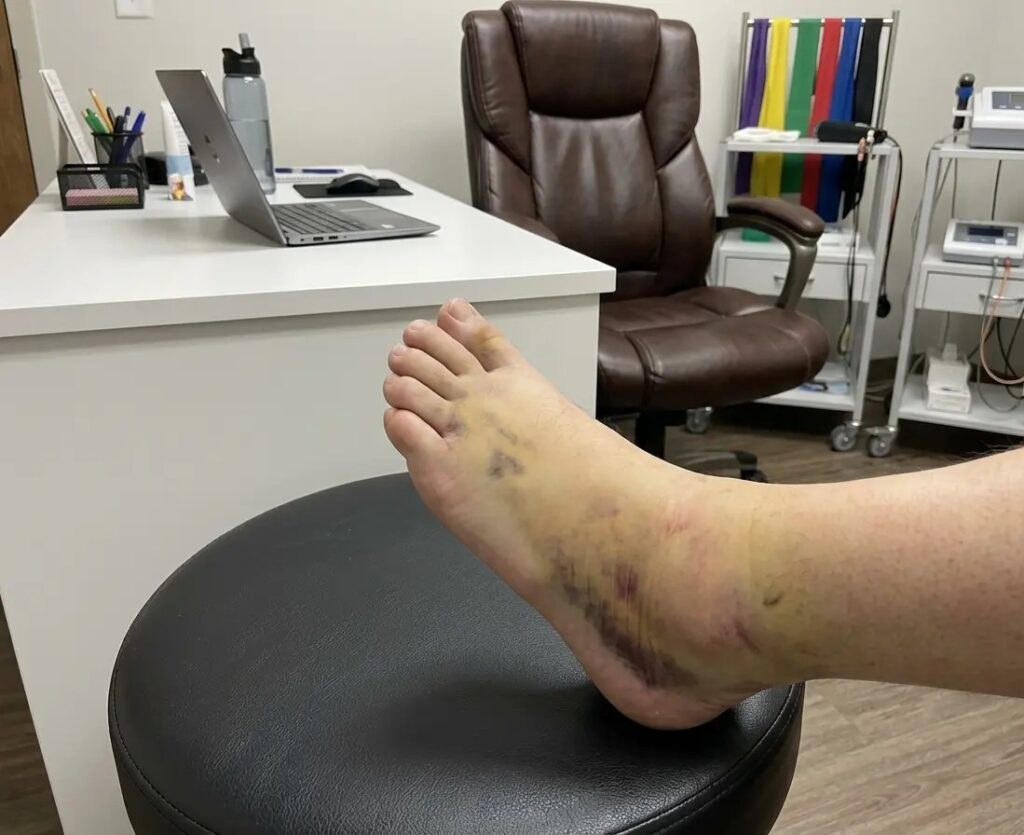
You were stepping off a curb near Apollo Gold Plaza, or perhaps playing a quick game of football at a local ground in Nipania, when your foot suddenly rolled inward. The immediate sharp pain is followed by a dull throb, and within minutes, your ankle begins to puff up like a balloon. At this exact moment, the actions you take constitute Ankle Sprain First Aid, and they are the most critical steps in determining whether you will be back on your feet in days or struggling with a “weak ankle” for months.
Most people in Indore have heard of the RICE method. It has been the gold standard for decades. However, modern sports medicine has evolved. While rest is important, staying completely still for too long can actually delay your healing. This guide will walk you through the immediate management of your injury, comparing the traditional RICE approach with the more modern POLICE protocol, and helping you decide when it is time to stop home treatment and see a specialist.
The Critical First 10 Minutes After a Twist
When you roll your ankle, the ligaments—the fibrous bands that stabilize your joint—are stretched or torn. This trauma triggers an immediate inflammatory response. Blood rushes to the area, causing heat and swelling. While inflammation is a natural part of healing, excessive swelling can compress nerves and slow down the delivery of repair cells.
Your first goal is to stop the activity immediately. Whether you are at home in Skye Luxuria or walking near Skye Privilon, do not try to “walk it off.” If you continue to put weight on a freshly torn ligament, you risk turning a simple Grade 1 stretch into a much more serious Grade 2 or 3 tear. Sit down, remove your shoe and sock gently to assess the area, and begin the first steps of Ankle Sprain First Aid.
RICE vs. POLICE: Which Method Should You Use?
For years, the medical community recommended RICE (Rest, Ice, Compression, Elevation). While this is still better than doing nothing, experts now favor the POLICE method for faster functional recovery.
The RICE Method Explained
- Rest: Avoid all activity and weight-bearing.
- Ice: Apply cold packs to reduce pain and blood flow.
- Compression: Use an elastic bandage to manage swelling.
- Elevation: Keep the foot above the level of your heart.
The POLICE Method: The Modern Standard
POLICE stands for Protection, Optimal Loading, Ice, Compression, and Elevation. The key difference here is “Optimal Loading.” Instead of total rest, we encourage gentle, pain-free movement as soon as possible. Research suggests that early, controlled movement helps the ligament fibers align correctly as they heal, preventing the buildup of stiff scar tissue.
Protection: Shielding the Injured Ligament
The “P” in POLICE is about preventing further damage. In the immediate aftermath, this might mean using crutches or a sturdy ankle brace. If you are a resident of BCM Paradise or Divine Greens and have a long walk to your car or apartment, you must protect the joint from another twist. Use a lace-up brace or a stirrup splint if available. This protection allows the ligament to rest in a shortened position, which is ideal for the early stages of biological repair.
Optimal Loading: The Secret to Faster Healing
This is where many patients get confused. Optimal Loading does not mean going for a run. It means doing tiny, pain-free movements like “ankle alphabets” where you draw letters in the air with your big toe. If you can stand on your foot without sharp pain, gentle walking for short distances is actually beneficial. This movement acts like a pump for your lymphatic system, helping to move the swelling out of the ankle and back into your circulation. This is one of the most critical yet neglected step of Ankle Sprain First Aid.
Ice: How to Use Cold Therapy Safely
Ice is the most misunderstood part of Ankle Sprain First Aid. Its primary job is pain relief, not necessarily “curing” the inflammation. Apply ice for 15 to 20 minutes every 2 to 3 hours during the first 48 hours. Never apply ice directly to the skin, as this can cause frostbite or nerve irritation. Wrap the ice pack in a thin damp towel for the best transfer of cold. If you are at home in BCM Planet or Ocean Park and don’t have a professional ice pack, a bag of frozen peas works excellently because it molds to the shape of your ankle bones.
Compression: Managing the “Egg” on Your Ankle
Compression is perhaps the most effective way to limit swelling. Use an elasticated bandage (like a Crepe bandage). Start the wrap at the base of your toes and wrap upward toward your calf. Each layer should overlap the previous one by about half. It should feel snug but not tight enough to cause numbness, tingling, or increased pain. If your toes turn blue or feel cold, the wrap is too tight. Proper compression is a cornerstone of effective Ankle Sprain First Aid management.
Elevation: Using Gravity to Your Advantage
Elevation is only effective if your ankle is higher than your heart. Sitting on a recliner with your foot on a stool is not enough. Lie down on a bed or sofa and prop your leg up on three or four pillows. This allows gravity to help the fluid drain away from the injury site. Many patients find that elevating the leg while sleeping during the first two nights significantly reduces the morning stiffness associated with sprains.
The Ottawa Ankle Rules: Do You Need an X-ray?
Not every twisted ankle requires a trip to the emergency room. However, you should use the Ottawa Ankle Rules to decide if you need professional imaging. You should seek immediate medical attention if:
- You cannot bear weight for at least four steps immediately after the injury and in the clinic.
- You have bone tenderness at the back edge or tip of the lateral or medial malleolus (the “bumps” on the side of your ankle).
- You have pain at the base of the fifth metatarsal (the bone on the outside of your midfoot).
If you meet any of these criteria, you may have an avulsion fracture rather than a simple ligament tear. In such cases, Ankle Sprain First Aid is only the beginning, and a professional diagnosis is mandatory.
Managing Pain: Should You Take Medication?
In the first 48 hours, avoid anti-inflammatory drugs (NSAIDs) like Ibuprofen if possible. Inflammation is the body’s signal to start the healing process, and completely blocking it with pills too early might actually slow down long-term tissue repair. Paracetamol is generally a safer choice for initial pain management. Always consult a doctor before starting any medication, especially if you have underlying health conditions.
Common Mistakes to Avoid in the First 48 Hours
When performing Ankle Sprain First Aid, what you don’t do is just as important as what you do. Avoid the “HARM” factors:
- Heat: Avoid hot showers, heat packs, or saunas, as heat increases blood flow and swelling.
- Alcohol: Alcohol can increase swelling and mask the pain, leading you to over-exert yourself.
- Running: Any high-impact activity will likely aggravate the tear.
- Massage: Rubbing a fresh injury can cause more bleeding and swelling in the area.
Transitioning from First Aid to Rehabilitation
Once the initial 72-hour window has passed, the “Ankle Sprain First Aid” phase ends and the “Rehabilitation” phase begins. This is where most people fail. They assume that because they can walk again, the injury is gone. However, the ligament is still weak and the balance sensors (proprioception) in your ankle are likely damaged. This is the stage where you should consult a professional for sports physiotherapy to prevent the injury from becoming a recurring problem.
Patients should focus on balance training and calf strengthening once the acute pain subsides. Failure to do so often leads to “Chronic Ankle Instability,” where the ankle feels “loose” or gives way during normal walking.
Why Professional Guidance is Essential in Indore
Living in a developing hub like Nipania means you have access to specialized care. While Ankle Sprain First Aid gets you through the weekend, a physiotherapist can provide hands-on manual therapy to restore joint gliding. They can also use specialized tools like ultrasound to manage deep-seated inflammation that ice cannot reach. If you are a resident of BCM Paradise or BCM Planet, having a local expert to guide your return to activity can save you months of frustration.
“First aid is about limiting the damage; physiotherapy is about restoring the function. You need both to truly recover.”
Living with an Active Ankle in Indore
Indore is a city that keeps you on the move. Whether you are navigating the walkways of Apollo DB City or shopping at the commercial centers, your ankles bear the brunt of every step. Proper Ankle Sprain First Aid is a life skill that every active person should know. By following the POLICE protocol and respecting the biological timelines of ligament healing, you ensure that a simple trip near Ocean Park remains a minor footnote in your life rather than a chronic disability.
Remember, the goal of first aid is to stabilize the situation. Once you have managed the initial swelling and pain, the real work of strengthening begins. Don’t settle for an ankle that just “doesn’t hurt.” Aim for an ankle that is strong, stable, and ready for your next adventure in Indore.
While immediate care helps manage the initial pain, following a structured program for Ankle Sprain Physiotherapy in Indore is the only way to restore full strength and prevent the injury from happening again.
Frequently Asked Questions about Ankle Sprain First Aid
- Should I use ice or heat for a freshly twisted ankle?
Always use ice for a fresh injury. Heat increases blood flow, which will make the swelling worse in the first 48 to 72 hours. Ice helps constrict blood vessels and numbs the pain. - How long should I keep my ankle elevated?
You should aim to elevate your ankle for as long as possible during the first 24 to 48 hours. Ideally, it should stay elevated whenever you are sitting or lying down until the swelling begins to subside. - Can I walk on my sprained ankle if it doesn’t hurt too much?
If you can walk without a limp and without sharp pain, Optimal Loading is encouraged. However, if walking causes you to limp or increases the throbbing, you should use crutches or rest until the pain decreases. - How tight should a compression bandage be?
The bandage should be snug but not restrictive. If you feel throbbing, numbness, or if your toes become pale or blue, the wrap is too tight. It should feel like a firm hug around the joint. - Is the RICE method outdated?
RICE is not wrong, but the POLICE method is more modern. POLICE emphasizes that total rest can lead to stiffness, whereas Optimal Loading helps the ligament heal in a more functional way. - When can I go back to the gym after a sprain?
This depends on the grade of the sprain. For a Grade 1 sprain, you might return to light activity in a week. For Grade 2 or 3, it could take weeks or months. You should be cleared by a physiotherapist before returning to high-impact sports. - Why does my ankle hurt more at night?
At night, there are fewer distractions, so you notice the pain more. Additionally, inflammatory chemicals can pool in the joint if the foot is not elevated properly during the day. - Does a pop sound mean a fracture?
A pop often signifies a ligament tear. A crack or crunch is more associated with a bone fracture. However, only an X-ray or a clinical exam can confirm this for sure. - How often should I apply ice?
Apply ice for 15 to 20 minutes every 2 to 3 hours. Do not leave ice on for longer than 20 minutes at a time, as this can trigger a reaction where the body actually increases blood flow to the area to prevent freezing. - Can I treat a Grade 3 sprain entirely at home?
No. A Grade 3 sprain is a complete rupture of the ligament and often involves significant instability. This requires professional evaluation, possibly a boot or brace, and long-term physiotherapy to avoid surgery.
Medical Disclaimer: The information provided in this article is for educational purposes only and is not intended as a substitute for professional medical advice, diagnosis, or treatment. Always seek the advice of your physician or other qualified health providers with any questions you may have regarding a medical condition. Never disregard professional medical advice or delay in seeking it because of something you have read here.
External Resources:
.