
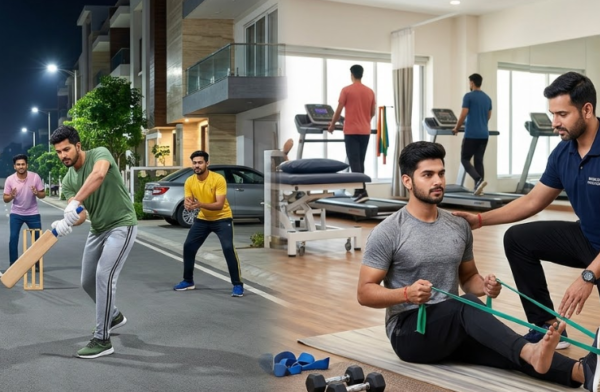
You did not see it coming. One moment you were sprinting between wickets at your Sunday cricket match in Nehru Park. The next, your ankle rolled, something popped, and you were on the ground holding your knee. Or maybe it was not that dramatic. Maybe it was that sharp pull in your hamstring during a morning jog near Pipliyapala lake. Or the shoulder that has been aching for weeks since you started doing overhead presses at the gym.
Sports injuries do not only happen to professional athletes. In Indore, they happen to the weekend cricketer, the morning jogger, the badminton enthusiast at the club, the college student playing football, the gym-goer trying to hit a personal best, and the 45-year-old who decided to get back in shape after years of sitting. The injury does not care about your skill level. It cares about whether your body was prepared for what you asked it to do.
And when the injury happens, the advice you get usually sounds like this: “Take rest. Put ice. Take Combiflam. It will be fine in a week.” Sometimes it is fine. But when it is not – when the swelling does not go down, when the pain comes back every time you try to play again, when you have lost confidence in that ankle or that shoulder – you need something more than rest and ice. You need sports injury physiotherapy in Indore that actually diagnoses the problem, fixes the damage, rebuilds your strength, and prepares your body so the same injury does not happen again.
Why Sports Injuries Are Exploding in Indore Right Now
Indore has changed. The city that was once known primarily for food and trade is now a fitness-conscious city. New gyms are opening every month in Vijay Nagar, Nipania, and Palasia. Running groups meet at dawn near the Narmada expressway. Box cricket arenas and badminton courts are packed every evening. CrossFit boxes, functional training studios, and calisthenics parks have popped up across the city.
This is great for health. But it has also brought a wave of injuries that the city was not prepared for. Here is why:
- No warm-up culture – Most recreational athletes in Indore skip warming up entirely. They walk onto the cricket pitch or badminton court cold and expect their muscles and joints to perform at full speed immediately. Cold muscles tear. Stiff joints sprain.
- Poor technique in the gym – The boom in gym culture has brought thousands of new lifters, but qualified trainers are still rare. Incorrect squat form, excessive overhead pressing, and ego-lifting with weights the body is not ready for lead to shoulder impingements, back injuries, and knee damage.
- Weekend warrior syndrome – You sit at a desk all week, your muscles are tight, your joints are stiff, and then on Saturday you play 3 hours of intense cricket or football. Your body goes from zero to a hundred with no transition. This is how hamstring tears, ankle sprains, and ACL injuries happen.
- Playing through pain – In a culture where “pain is weakness leaving the body” is treated like wisdom, many people in Indore continue playing or training through pain signals. A minor strain that would have healed in a week with proper management becomes a chronic injury that takes months to fix.
- No access to sports-specific rehabilitation – Until recently, most physiotherapy clinics in Indore focused on geriatric patients and post-surgical cases. The concept of sport-specific rehabilitation – getting an athlete back to their particular sport safely – is still relatively new here.
The Most Common Sports Injuries That Walk Into an Indore Physio Clinic
Every sport loads the body differently, and every sport produces its own signature injuries. Here are the ones a sports physiotherapist in Indore sees most frequently, along with why they happen and what they feel like.
Ankle Sprains – The Injury Nobody Takes Seriously Enough
You rolled your ankle on an uneven surface while fielding, or you landed awkwardly after a jump shot in basketball. There was immediate pain on the outside of the ankle, swelling within hours, and difficulty putting full weight on the foot. You iced it, wrapped it, and limped around for a few days. It felt better, so you went back to playing. Then it happened again. And again.
This is the trap of ankle sprains. The initial pain goes away relatively quickly, so people assume it is healed. But the ligaments that were stretched or torn need proper rehabilitation to regain their strength and proprioception (your body’s sense of where the joint is in space). Without this rehab, the ankle remains unstable and re-injury becomes almost guaranteed. Research shows that up to 70% of people who sprain their ankle once will sprain it again – unless they do targeted balance and strengthening exercises.
Hamstring Strains – The Sprinter’s Nightmare
That sudden sharp pain at the back of your thigh when you accelerated to chase a ball or sprinted between wickets – that is a hamstring strain. The hamstring muscles are particularly vulnerable during explosive movements like sprinting, quick starts, and sudden direction changes. In Indore’s cricket and football circles, this is one of the most common injuries.
The problem with hamstring injuries is that they have a very high recurrence rate. If you return to sport before the muscle has fully healed and been properly strengthened through its entire range, you will tear it again – often worse than the first time. Proper rehabilitation includes progressive eccentric strengthening (the Nordic hamstring exercise is the gold standard), running retraining, and sport-specific drills before clearance to play.
Knee Ligament Injuries – ACL, MCL, and the Fear That Follows
A sudden twist, a change of direction, a landing from a jump with your knee collapsing inward – and you feel a pop inside your knee. The swelling arrives within hours. Walking feels unstable. The fear sets in: “Is my ACL gone?”
ACL tears get all the attention, but MCL injuries are actually more common in contact sports and respond extremely well to physiotherapy without surgery. Even for ACL injuries, the decision between surgical and non-surgical management depends on your activity level, the degree of instability, and your goals. Many recreational athletes in Indore who do not need to return to competitive pivoting sports can rehabilitate successfully without surgery through a structured physiotherapy program.
For those who do need ACL reconstruction surgery, the Cleveland Clinic confirms that post-surgical physiotherapy is the single most important factor in determining how well you recover. Surgery fixes the ligament, but physiotherapy rebuilds the muscle strength, joint control, and movement confidence needed to actually use that knee again.
Shoulder Injuries – Rotator Cuff Strains and Impingement
Bowlers in cricket, swimmers, badminton players, and gym-goers doing overhead presses are all at risk for shoulder injuries. The rotator cuff – a group of four small muscles that stabilize the shoulder – can be strained from repetitive overhead movements or torn from a sudden force. Impingement happens when the tendons get pinched between the bones of the shoulder during arm elevation, causing pain with every overhead reach.
These injuries respond exceptionally well to physiotherapy when caught early. The treatment focuses on correcting the muscle imbalance that caused the problem (usually weak rotator cuff and scapular muscles combined with tight chest and front shoulder muscles), restoring pain-free range of motion, and gradually rebuilding throwing or overhead strength.
Tennis Elbow and Golfer’s Elbow – Not Just for Tennis Players and Golfers
Despite their names, these conditions are extremely common in cricket players (from gripping the bat), badminton players, and gym-goers who do too many pulling or gripping exercises. Tennis elbow causes pain on the outside of the elbow; golfer’s elbow causes pain on the inside. Both are caused by overload of the forearm tendons and respond well to a specific type of exercise called eccentric loading, combined with manual therapy and activity modification.
The RICE Method Is Only the First 48 Hours – What Happens After That Matters More
Every sports person in Indore knows RICE – Rest, Ice, Compression, Elevation. It is the standard first-aid response for any acute sports injury, and it does have value in the first 24 to 48 hours for controlling swelling and pain.
But RICE is first aid, not treatment. It is the equivalent of putting a bandage on a cut – it stops the bleeding, but it does not heal the wound. What happens after those first 48 hours determines whether you recover fully in 3 weeks or deal with recurring problems for 3 years.
The modern approach to sports injury recovery follows a different framework. The NHS UK recommends early gentle movement, progressive loading, and structured rehabilitation rather than prolonged rest. Prolonged rest actually delays healing because muscles weaken, joints stiffen, and the injured tissue does not receive the mechanical signals it needs to repair properly.
This is where sports injury physiotherapy in Indore picks up where first aid leaves off.
How Sports Injury Physiotherapy Actually Works – The 4-Phase Comeback Plan
Proper sports rehabilitation is not random exercises and hoping for the best. It follows a structured, evidence-based progression that takes you from injury to full return-to-sport. Here is how it works at a specialist sports physiotherapy clinic:
Phase 1: Protect and Manage (Days 1 to 7)
The goals here are simple – reduce swelling, manage pain, and protect the injured tissue from further damage. Treatment includes specific manual therapy techniques to promote fluid drainage, gentle range-of-motion exercises within the pain-free zone, and education on what to avoid. Importantly, this phase is not just about sitting on a couch. Controlled movement begins almost immediately because complete rest has been shown to slow healing.
Phase 2: Restore Range and Start Loading (Weeks 1 to 3)
Once the acute inflammation settles, the focus shifts to restoring full range of motion and beginning to load the injured tissue. This is where manual therapy – joint mobilization, soft tissue techniques, and dry needling for stubborn muscle tightness – plays a big role. Progressive exercises are introduced, starting with low-load, pain-free movements and gradually increasing demand. For a hamstring strain, this might mean starting with gentle isometric holds and progressing to slow eccentrics. For an ankle sprain, it means balance work on stable surfaces before progressing to unstable ones.
Phase 3: Rebuild Strength and Endurance (Weeks 3 to 8)
This is the phase most people in Indore skip. They feel better, the pain is gone, so they go back to playing. This is exactly how re-injuries happen. The tissue may be pain-free, but it is not yet strong enough to handle the demands of sport.
During this phase, exercises become progressively more challenging. Resistance training targets the injured area and the surrounding muscles. Cardiovascular fitness is maintained through modified activities. Single-leg balance and control exercises rebuild the proprioception that was disrupted by the injury. By the end of this phase, the injured area should be at least 80% to 90% as strong as the uninjured side.
Phase 4: Return to Sport (Weeks 6 to 12+)
The final phase bridges the gap between “recovered” and “match-ready.” It includes sport-specific drills – change of direction for football and cricket players, overhead throwing for bowlers, explosive sprints for sprinters, racket work for badminton and tennis players. The physiotherapist progressively increases speed, intensity, and complexity until you can perform all the movements your sport demands without pain, fear, or compensation.
Only after passing these return-to-sport criteria – which include strength tests, movement quality assessment, and sport-specific functional tests – should you return to full competition. Skipping this phase is the number one reason for re-injury.
Why “Just Rest It” Is the Worst Advice for Most Sports Injuries
This advice is given to almost every injured athlete in Indore, usually by well-meaning friends, family members, or even some doctors who are not specialized in sports medicine. And it is wrong for the majority of sports injuries.
Here is what happens when you “just rest” a sports injury:
- The injured muscle or ligament heals, but it heals shorter and weaker because it was never progressively loaded during recovery
- The muscles around the injury weaken from disuse, leaving the joint less protected than before
- Your brain loses the movement patterns and proprioceptive awareness needed for sport, making you clumsy and hesitant when you return
- You lose cardiovascular fitness, which means you fatigue faster when you come back – and fatigue is a major risk factor for injury
- You develop a fear of the movement that caused the injury, which changes your biomechanics and often leads to injuries in other areas
Controlled, progressive loading – guided by a physiotherapist who knows exactly how much stress the tissue can handle at each stage – produces tissue that is stronger, more resilient, and better prepared for the demands of sport than rest alone ever could.
What Makes Dr Manisha’s Sports Rehabilitation Different in Indore
Most physiotherapy clinics in Indore treat sports injuries the same way they treat every other condition – heat pack, machine, and generic exercises. At Dr Manisha Mishra’s clinic, sports injury rehabilitation is built on entirely different principles:
- Sport-specific assessment – A cricket bowler’s shoulder injury needs a different assessment and treatment plan than a gym-goer’s. The physiotherapist identifies not just what is injured, but what movement pattern or training error caused the injury in the first place.
- Manual therapy plus progressive exercise – Zero machine dependency. Treatment combines hands-on techniques (joint mobilization, soft tissue work, dry needling) with structured exercise progressions designed around your sport.
- Return-to-sport criteria – You are not cleared to return to your sport based on how you feel. You are cleared based on objective strength tests, functional movement assessments, and sport-specific performance drills. This approach dramatically reduces re-injury rates.
- Certified in sports nutrition and kinesio taping – Dr Manisha’s sports nutrition certification means she can advise on recovery nutrition alongside rehabilitation. Kinesio taping is used to support injured structures during the return-to-sport phase without restricting movement.
- Orthopaedic collaboration – When injuries need surgical evaluation – significant ACL tears, complex meniscus injuries, shoulder dislocations – seamless referral to Dr Prince Uchadiya ensures you get the right treatment at the right time, with a clear post-surgical rehabilitation plan already in place.
How to Reduce Your Injury Risk Before It Happens
The best sports injury is the one that never happens. Whether you play cricket at Holkar Stadium grounds, do circuits at your local gym in Scheme 78, or run along the AB Road stretch every morning, these five habits will significantly reduce your injury risk:
- Warm up for 10 minutes before every session – Not static stretching, but dynamic movements. Leg swings, hip circles, bodyweight squats, arm circles, and a light jog to raise your body temperature and prepare your muscles for action.
- Strengthen what your sport demands – If you play cricket, your hamstrings, rotator cuff, and core need specific conditioning. If you run, your calves, glutes, and hip stabilizers need work. If you play badminton, your shoulders, knees, and ankles need targeted strengthening. Generic gym workouts are not enough.
- Do not increase training load by more than 10% per week – Whether it is running distance, gym weight, or playing hours, sudden jumps in training volume are the most reliable predictor of injury. Increase gradually.
- Listen to the early warning signs – A niggle that lasts more than 3 days is not normal. Pain that gets worse during activity is your body telling you something needs attention. Acting on these early signals can prevent a minor issue from becoming a major injury.
- Cool down and recover properly – Gentle stretching after activity, adequate hydration, proper sleep, and rest days between intense sessions give your body the time it needs to repair and adapt.
10 Most Asked Questions About Sports Injury Physiotherapy in Indore
1. How soon after a sports injury should I see a physiotherapist?
Ideally within the first 48 to 72 hours. Early assessment gives your physiotherapist the best picture of the injury and allows treatment to begin during the window when it is most effective. Do not wait for weeks hoping it will resolve on its own – the earlier you start rehabilitation, the faster and more completely you recover.
2. Can I keep playing if the injury only hurts a little?
It depends on the type and location of pain. A mild muscle soreness that eases during warm-up is usually fine. But pain that is sharp, increases during activity, is located on a joint, or causes swelling means you should stop and get assessed. Continuing to play through these signs often turns a 2-week injury into a 2-month one.
3. How long does sports injury recovery take?
This varies widely. A mild ankle sprain may take 2 to 4 weeks. A moderate hamstring strain typically needs 4 to 6 weeks. A partial ligament tear can take 6 to 12 weeks. Post-ACL reconstruction rehabilitation takes 6 to 9 months. Your physiotherapist will give you a realistic timeline based on your specific injury and progress.
4. Should I get an MRI for every sports injury?
Not necessarily. A skilled sports physiotherapist can diagnose most injuries through physical examination and specific movement tests. An MRI is recommended when the clinical picture is unclear, when there is suspicion of a significant structural injury (complete ligament tear, stress fracture), or when the injury is not responding to treatment as expected.
5. Can physiotherapy treat an ACL tear without surgery?
For many recreational athletes who do not participate in sports requiring sharp cutting and pivoting movements, conservative (non-surgical) rehabilitation can produce excellent results. The decision depends on the degree of knee instability, your activity goals, and whether the knee gives way during daily or sporting activities. A physiotherapist can help you make this decision with objective testing.
6. I keep re-injuring the same spot – why?
Re-injury almost always happens because the initial injury was never fully rehabilitated. The tissue healed enough for pain to go away, but it was never restored to its pre-injury strength, flexibility, and neuromuscular control. Proper rehabilitation that includes progressive strengthening, sport-specific drills, and return-to-sport testing is the solution to breaking the re-injury cycle.
7. How much does sports injury physiotherapy cost in Indore?
Session fees in Indore typically range from Rs 500 to Rs 1500 depending on the clinic, session duration, and the physiotherapist’s qualifications. A specialized one-on-one sports rehabilitation session of 45 to 60 minutes with a qualified musculoskeletal physiotherapist will cost more than a generic machine-based session, but the difference in outcomes is significant.
8. Is it normal to feel sore after physiotherapy?
Mild muscle soreness after a physiotherapy session – similar to what you feel after a good workout – is completely normal and usually settles within 24 to 48 hours. However, sharp pain during treatment or increased joint swelling after a session is not normal and should be communicated to your physiotherapist immediately so the treatment plan can be adjusted.
9. Can I do gym workouts while recovering from a sports injury?
Usually yes, with modifications. The goal during recovery is to maintain fitness in the parts of your body that are not injured while protecting the injured area. Your physiotherapist can design a modified training program that keeps you active, maintains your cardiovascular fitness, and supports recovery rather than hindering it.
10. When am I ready to return to my sport after injury?
Being pain-free is not the same as being ready. True return-to-sport readiness means the injured area has regained at least 90% of its strength compared to the other side, you can perform all sport-specific movements at full speed without pain or compensation, and you feel confident in the injured area. Your physiotherapist should clear you based on these objective criteria, not just on how you feel.