
You reach for your coffee cup and feel a sharp twinge on the outside of your elbow. You try to open a jar, shake hands, or lift a bag of groceries, and the same pain shoots down your forearm. If this sounds familiar, you are probably dealing with tennis elbow, and you do not need to have ever picked up a racquet to get it.
Tennis elbow, medically known as lateral epicondylitis, is one of the most common causes of elbow pain seen by physiotherapists. It affects office workers, homemakers, tailors, mechanics, gym-goers, and yes, tennis and badminton players too. The good news is that most people recover fully with the right tennis elbow physiotherapy program, without needing an injection or surgery.
This guide walks you through everything you need to know about tennis elbow physiotherapy in Indore: what causes tennis elbow, how physiotherapists diagnose and treat it, what exercises actually help, how long recovery takes, and when you should stop waiting and book an appointment.
What Exactly Is Tennis Elbow?
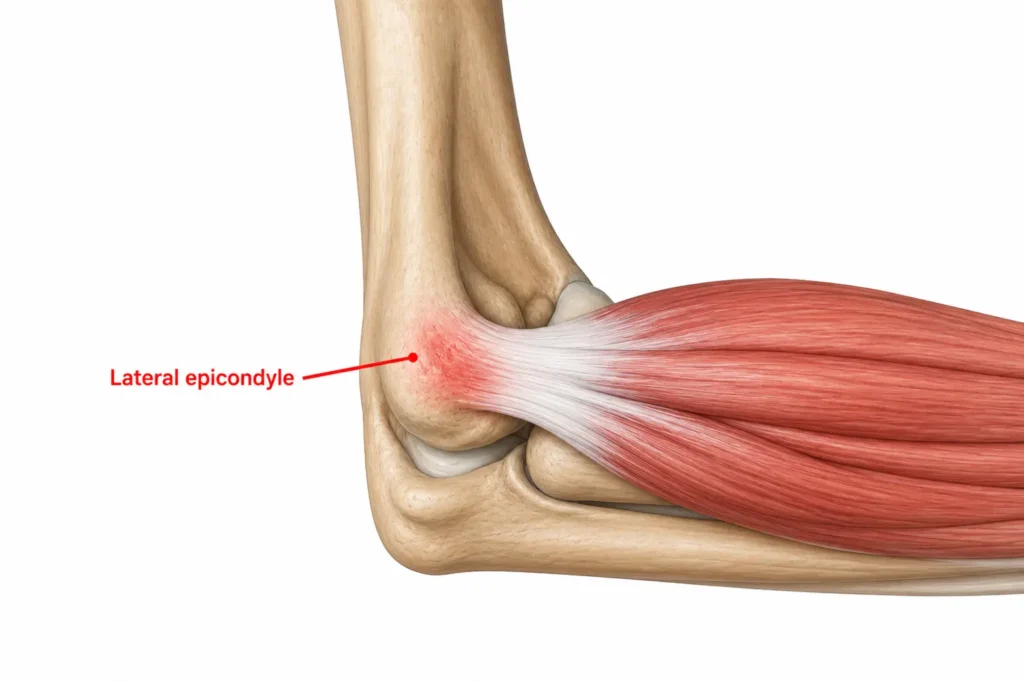
Tennis elbow happens when the tendons that connect your forearm muscles to the bony bump on the outside of your elbow become irritated and damaged from repeated strain. This bony bump is called the lateral epicondyle. According to the Cleveland Clinic, tennis elbow is a tendon injury that causes pain and inflammation in the elbow, most often triggered by repetitive strain on the tendon that connects the forearm muscles to the outer elbow (source).
Despite the name, most people who develop tennis elbow have never played tennis in their life. Repeated gripping, twisting, or wrist movements, whether from typing, cooking, driving, using a screwdriver, or carrying a heavy bag, can gradually wear down the tendon fibers and trigger pain.
Common Causes of Tennis Elbow in Everyday Life
Physiotherapists in Indore regularly see tennis elbow linked to activities that have nothing to do with sport. Some common triggers include:
- Prolonged computer use with poor wrist posture
- Repetitive kitchen tasks like chopping, kneading dough, or wringing cloth
- Manual labor involving screwdrivers, hammers, or vibrating tools
- Carrying heavy bags or children with the elbow extended
- Racquet sports with incorrect grip size or technique
- Sudden increase in gym activity, especially exercises involving wrist extension
- Painting, gardening, or other one-off intense manual activities
The NHS notes that the dominant arm is most commonly affected, since tennis elbow is often an overuse injury caused by repetitive strain from tasks involving gripping and hand movement.
How Do You Know If It Is Tennis Elbow?
Tennis elbow has a fairly recognizable pattern of symptoms. You may notice:
- Pain and tenderness on the outer part of the elbow, sometimes spreading into the forearm
- Discomfort that worsens when gripping, lifting, or twisting the wrist
- Weakness in your grip, such as struggling to hold a cup or shake hands firmly
- Pain that starts mild and gradually becomes more constant over weeks
- Stiffness in the elbow, especially in the morning
Most cases do not require an X-ray or MRI. A physiotherapist can usually confirm tennis elbow through a physical examination and a few simple resistance tests, checking how your elbow responds to specific wrist and finger movements, which usually is the first step of tennis elbow physiotherapy in Indore.
Why Tennis Elbow Physiotherapy Is the First Line of Treatment in Indore
Tennis elbow is rarely a condition that needs surgery. Research consistently shows that structured, progressive exercise is one of the most effective ways to treat it. Most people improve within a few months of consistent nonsurgical treatment and rest, and physiotherapy plays a central role in that recovery.
A good physiotherapy plan for tennis elbow generally includes:
1. Activity Modification and Load Management
Your physiotherapist will help identify which daily movements are aggravating your tendon and suggest practical ways to modify them, rather than telling you to stop using your arm completely. Complete rest often does not help tendons heal faster; controlled, gradual loading does. This is the first step of tennis elbow physiotherapy in Indore.
2. Manual Therapy
Techniques like deep tissue massage, joint mobilization, and myofascial release can reduce pain and improve movement in the early stages of treatment. Some physiotherapists use the Cyriax technique, which combines deep transverse friction massage with a specific manipulation, though this needs to be delivered by a trained professional in the correct sequence.
3. Progressive Strengthening Exercises
This is the core of any tennis elbow physiotherapy program in Indore. Exercises typically progress through stages:
- Isometric holds, where you hold your wrist in a fixed position against light resistance, useful for pain relief in the early painful stage
- Eccentric exercises, where the muscle lengthens under load, such as slowly lowering your wrist after lifting it, shown in research to strengthen tendon tissue effectively
- Progressive resistance training, gradually increasing weight and repetitions as pain reduces
- Functional strengthening, preparing your arm for real-life tasks like gripping, lifting, and twisting
4. Stretching
Gentle stretching of the wrist extensor muscles helps maintain flexibility and reduce tension on the irritated tendon, particularly useful before and after exercise sessions.
5. Bracing and Support
A counterforce elbow strap or brace can reduce the load on the tendon during activity. The NHS suggests trying a forearm strap or elbow brace, available from most pharmacies, alongside simple exercises such as gently bending and straightening the arm.
6. Pain Relief Modalities
Some clinics in Indore also use therapeutic ultrasound, ice therapy, or electrical stimulation alongside exercise to help manage pain in the early phase of treatment, though exercise remains the most important long-term intervention.
How Long Does Tennis Elbow Physiotherapy Take to Heal the Elbow?
This is one of the most common questions patients ask their physiotherapist in Indore, and the honest answer is that recovery varies from person to person. In general:
- Mild cases may start improving within four to six weeks of consistent exercise
- Moderate cases often take two to three months to see significant improvement
- More chronic or long-standing cases can take six months to a year to fully resolve
Patience matters here. Tendons heal more slowly than muscles because they have a limited blood supply, so it is common to feel frustrated if progress feels slow in the first few weeks. Sticking with your exercise program, even when improvement feels gradual, is usually what makes the biggest difference.
What Happens If You Ignore Tennis Elbow?
Many people try to push through the pain or rely only on painkillers, hoping it will resolve on its own. While tennis elbow can sometimes improve without treatment, ignoring it for months often allows the tendon damage to worsen, making the pain more constant and recovery slower once you do seek help. Left untreated for a long time, chronic tennis elbow can also lead to grip weakness that affects your ability to do simple daily tasks, from turning a key to carrying a bag.
If your elbow pain has lasted more than two weeks despite basic self-care, it is a reasonable time to look into tennis elbow physiotherapy in Indore rather than waiting it out further.
What to Expect at Your First Tennis Elbow Physiotherapy Session in Indore
If you are visiting a physiotherapist for tennis elbow in Indore for the first time, your session will usually include:
- A detailed history of your symptoms, including when the pain started and what activities worsen it
- A physical examination of your elbow, wrist, and grip strength
- Simple resistance tests to confirm the diagnosis
- A discussion of your daily activities, work, and any sports you play
- A personalized treatment plan, including exercises you can start immediately
Most programs for tennis elbow physiotherapy in Indore involve two to three sessions a week initially, tapering off as your symptoms improve and you transition to a home exercise routine.
Simple Self-Care Tips Alongside Physiotherapy
While your physiotherapist guides your treatment plan, a few habits at home can support faster recovery:
- Apply an ice pack wrapped in a towel to the painful area for fifteen to twenty minutes after activity
- Avoid activities that clearly worsen your pain, at least until your tendon has had time to settle
- Try lifting objects with your palm facing upward instead of downward, which reduces strain on the tendon
- Take short, frequent breaks if your work involves repetitive gripping or typing
- Use ergonomic tools or equipment where possible, especially at a computer workstation
These tips do not replace tennis elbow physiotherapy in Indore, but they can reduce flare-ups while your tendon heals.
When Tennis Elbow Physiotherapy Alone May Not Be Enough
For the vast majority of people, tennis elbow physiotherapy resolves the condition without further intervention. In a small percentage of cases, usually when symptoms have persisted for many months despite consistent physiotherapy, your doctor may discuss additional options such as corticosteroid injections or, rarely, surgery. Surgery is generally considered only after conservative treatment, including a proper tennis elbow physiotherapy program, has been tried for an extended period without success.
Choosing the Right Tennis Elbow Physiotherapy Clinic in Indore
When looking for physiotherapy care for tennis elbow in Indore, it helps to consider a few things:
- Whether the clinic offers a structured, progressive exercise program rather than only pain relief modalities
- Whether the physiotherapist takes time to assess your daily activities and work posture, not just your elbow
- Whether you are given a clear home exercise plan to follow between sessions
If you are exploring treatment options, you can also read more about our sports injury rehabilitation services in Indore or learn about our bone and joint physiotherapy programs for musculoskeletal conditions.
Living With Tennis Elbow: A Realistic Outlook
It helps to know that tennis elbow, while frustrating, is very treatable with the right physiotherapy support. It rarely causes lasting damage, and the vast majority of people return to their normal activities, including sport, work, and daily tasks, without needing surgery. The key is consistency: showing up for your tennis elbow physiotherapy sessions in Indore, doing your home exercises even on days the pain feels better, and being patient with the pace of tendon healing.
Tendons heal slowly, but they do heal. The people who recover fastest are usually the ones who stick with their exercise program even when progress feels slow.
Frequently Asked Questions About Tennis Elbow Physiotherapy in Indore
1. Can tennis elbow heal without physiotherapy?
Some mild cases improve with rest and activity modification alone, but recovery is usually faster and more complete with a structured tennis elbow physiotherapy in Indore, since exercise directly strengthens the healing tendon.
2. Is it okay to keep working if I have tennis elbow?
In most cases, yes, but you may need to modify tasks that involve heavy gripping or repetitive wrist movements. Your physiotherapist can help you adjust your work routine so you do not have to stop working completely.
3. Will a wrist brace alone fix tennis elbow?
A brace can reduce strain and ease pain during activity, but it works best alongside exercises rather than as a standalone treatment. Exercises are the cornerstone of tennis elbow physiotherapy in Indore.
4. How many physiotherapy sessions are usually needed for tennis elbow?
This varies by severity, but many people attend sessions two to three times a week for several weeks, then continue with home exercises as symptoms improve.
5. Can tennis elbow come back after treatment?
Yes, especially if the activity that originally caused it is resumed without modification. Continuing your strengthening exercises even after recovery helps reduce the chance of recurrence.
6. Is tennis elbow the same as golfer’s elbow?
No. Tennis elbow affects the outside of the elbow, while golfer’s elbow, or medial epicondylitis, affects the inside. The treatment principles are similar, but the exact exercises differ.
7. Should I stop exercising at the gym if I have tennis elbow?
You may need to temporarily avoid exercises that stress the wrist extensors, such as certain grip-heavy lifts, but your physiotherapist can guide you on which movements are safe to continue.
8. Do I need an MRI to confirm tennis elbow?
Usually not. Most cases are diagnosed through a physical examination and specific resistance tests when you visit a therapist for tennis elbow physiotherapy in Indore. Imaging is only used if there is uncertainty about the diagnosis.
9. Can tennis elbow affect both arms at the same time?
It is uncommon but possible, especially if both arms are used for the same repetitive activity, such as certain manual jobs or sports.
10. What is the fastest way to recover from tennis elbow?
There is no shortcut, but consistent progressive exercise, activity modification, and patience with the healing timeline give you the best chance at a full and lasting recovery. All of it are included in a comprehensive program for tennis elbow physiotherapy (in Indore).
Medical Disclaimer: This article is intended for general informational purposes only and does not replace professional medical advice, diagnosis, or treatment. Tennis elbow symptoms can sometimes overlap with other conditions, so please consult a qualified physiotherapist or doctor for an accurate diagnosis and a treatment plan suited to your specific condition.