
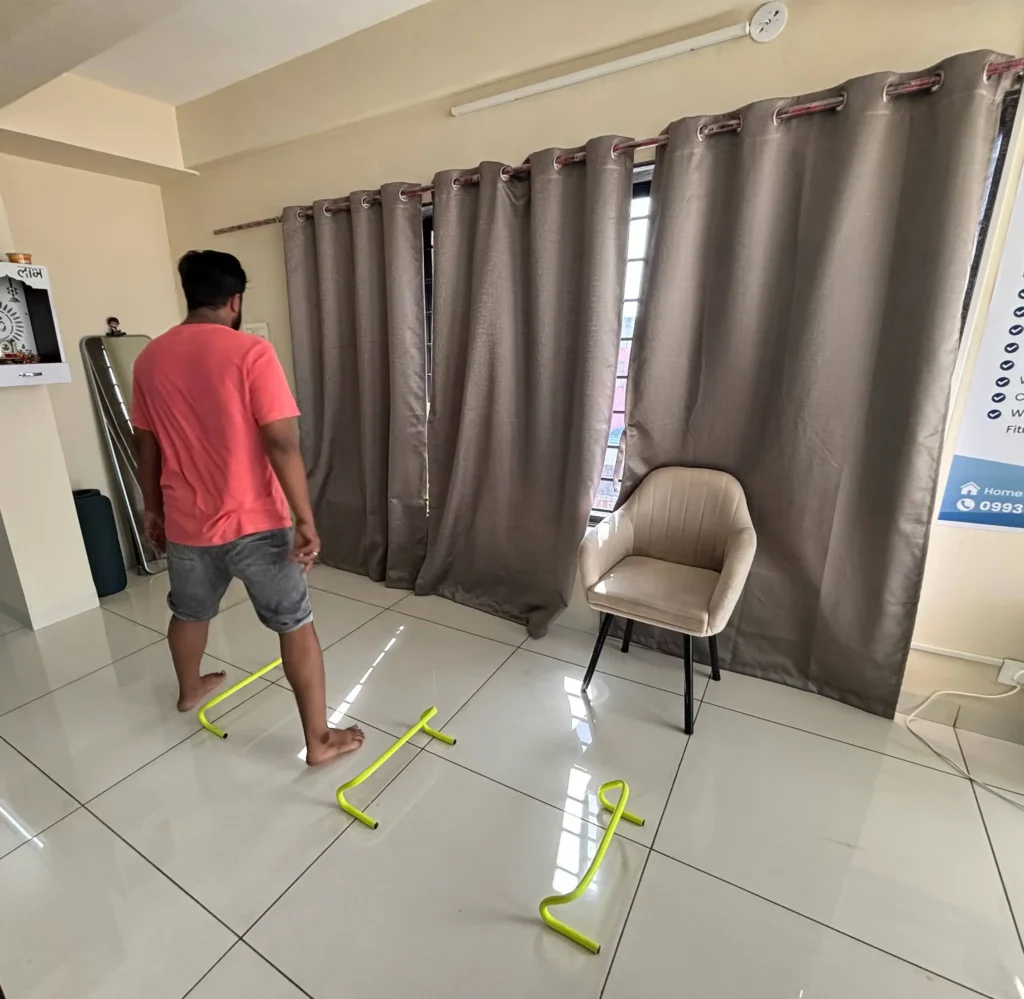
Only 55% of athletes return to competitive sport within one to two years of ACL reconstruction. One in five people under 25 who do return end up reinjuring the same or the opposite knee. These numbers are not meant to discourage you. They are meant to explain why return to sports after ligament surgeries should never be governed by a calendar date alone, but by a structured, criterion-based process, and why advanced plyometric rehabilitation sits at the center of doing this safely.
This guide breaks down exactly what that process looks like: why plyometric training matters so much, the four-stage progression used in modern rehabilitation, the specific tests that determine readiness, and the mistakes that most commonly delay a safe return to sports after ligament surgeries.
The Numbers Behind Return to Sports After Ligament Surgeries
Before looking at the training itself, it helps to understand exactly what the research says about outcomes, since these numbers shape every decision made during rehabilitation.
| Statistic | What It Means |
|---|---|
| 80% return to some form of sport | But only 65% return to the same level, and 55% return at a competitive level within 1-2 years |
| 1 in 5 under age 25 reinjure | Younger, more active athletes carry a meaningfully higher reinjury risk after returning |
| 38% reinjury rate if RTS testing is failed but sport is resumed anyway | Versus under 6% for athletes who pass proper return to sport testing before resuming |
| 51% reduction in reinjury risk for each month RTS is delayed, up to month 9 | Patience genuinely and measurably pays off, up to a clinically meaningful point |
| Fivefold increase in reinjury risk when returning within 6 months | Compared to athletes who wait until 8 or 12 months post-surgery |
Taken together, this data makes one thing clear: a safe return to sports after ligament surgeries depends far more on meeting specific physical and psychological benchmarks than on simply counting weeks since surgery.
Why Plyometric Training Is Central to Rehabilitation
Plyometric exercises, movements that involve rapid stretching and contracting of muscles such as jumping, hopping, and bounding, train the body to absorb and produce force quickly and efficiently. This is exactly the kind of demand placed on the knee during sport, particularly in cutting, pivoting, and landing movements, which is why plyometric rehabilitation plays such a central role in preparing athletes for return to sports after ligament surgeries.
A structured plyometric program does more than build power. It retrains neuromuscular control, meaning the coordination between the brain, nerves, and muscles that allows the knee to react appropriately to sudden changes in direction or unexpected forces, exactly the scenario where a reconstructed ligament is most vulnerable to reinjury.
The Four-Stage Plyometric Progression
A widely referenced clinical framework for plyometric rehabilitation after ligament reconstruction breaks the process into four progressive stages, each building on the neuromuscular control and strength developed in the one before it.
| Stage | Primary Focus | Example Exercises | Criteria to Progress |
|---|---|---|---|
| Stage 1: Foundational | Landing mechanics and basic force absorption | Double-leg jumps in place, box step-downs, controlled landings | Pain-free, symmetrical landing pattern on both legs |
| Stage 2: Introduction to Single-Leg Loading | Single-leg control and stability | Single-leg hops in place, lateral hops, single-leg box step-downs | Good single-leg control without excessive knee collapse inward |
| Stage 3: Multi-Directional and Reactive | Speed, reactive control, and change of direction | Bounding, multi-directional hops, reactive jump-and-stick drills | Consistent quality of movement across multiple directions |
| Stage 4: Sport-Specific | Replicating actual sport demands | Sport-specific agility drills, cutting maneuvers, simulated game scenarios | Passing formal return to sport testing, detailed below |
Progressing through these stages too quickly is one of the most common reasons return to sports after ligament surgeries does not go as planned. Each stage is meant to be earned through demonstrated control and symmetry, not simply completed on a fixed weekly schedule.
Return to Sport Testing: The Checklist That Actually Matters
Time since surgery alone is a poor predictor of readiness. Modern rehabilitation relies instead on a battery of objective tests, most built around the limb symmetry index, or LSI, which compares performance on the surgical leg to the uninjured leg. A widely used passing threshold is an LSI of at least 90 percent across the following tests.
| Test | What It Measures | Typical Passing Criteria |
|---|---|---|
| Single-leg hop for distance | Forward power and single-leg strength | LSI of 90% or higher |
| Triple hop for distance | Repeated power and control | LSI of 90% or higher |
| Crossover hop for distance | Rotational and lateral control | LSI of 90% or higher |
| 6-meter timed hop | Speed and confidence on the surgical leg | LSI of 90% or higher |
| Isokinetic quadriceps strength | Muscle strength symmetry | Quadriceps strength index of 90% or higher |
| T-Test agility drill | Multi-directional speed and control | Completed in under 11 seconds |
Research combining data from multiple studies has found that a 1 percent improvement in limb symmetry index can lead to as much as a 3 percent reduction in reinjury risk, which highlights just how much these numbers matter in the final decision around return to sports after ligament surgeries (source).
The Psychological Side of Return to Sports After Ligament Surgeries
Physical readiness is only part of the picture. Fear of reinjury, hesitation during cutting or landing movements, and a general lack of confidence in the reconstructed knee are consistently identified as factors that affect whether athletes actually return to their pre-injury level, even when they pass their physical tests. This psychological dimension is often assessed using a validated tool called the ACL-Return to Sport after Injury scale, which measures confidence, fear, and emotional readiness alongside the physical testing battery.
Ignoring this component is a common and costly mistake. An athlete who passes every hop test but still hesitates or alters their movement pattern out of fear during actual gameplay remains at meaningfully elevated risk, which is why a complete approach to return to sports after ligament surgeries must address both the body and the mind.
Realistic Timelines: What the Evidence Actually Supports
Guidance from major health institutions is fairly consistent on this point, even though popular expectations often run ahead of it.
| Source | Guidance |
|---|---|
| NHS | It can take six months or more to return to your former level of activity after ACL reconstruction |
| Cleveland Clinic | Full recovery typically takes six to nine months, longer for athletes returning to competitive sport |
| Clinical research consensus | Return to pivoting, cutting sport is generally not recommended before 9 months post-surgery |
This is precisely why criterion-based rehabilitation, progressing based on demonstrated ability rather than the calendar, remains the safest approach to return to sports after ligament surgeries, even when it feels slower than an athlete would like.
Common Mistakes That Delay a Safe Return
- Skipping foundational stages to reach sport-specific drills faster, before landing mechanics and single-leg control are properly established
- Relying on time alone as the marker of readiness, rather than objective test results
- Ignoring persistent strength asymmetry between the surgical and non-surgical leg
- Overlooking psychological readiness, allowing fear or hesitation to go unaddressed
- Returning to full training or competition immediately after passing tests, rather than gradually reintroducing sport-specific load
What a Well-Structured Plyometric Rehabilitation Program Looks Like
A physiotherapist guiding return to sports after ligament surgeries will typically structure the plyometric component around the following principles:
- Progression based on movement quality and symmetry, not a fixed timeline
- Regular reassessment of strength and hop performance throughout the program
- Gradual reintroduction of multi-directional and reactive movements before sport-specific drills
- Formal return to sport testing before clearance, rather than a subjective clinical impression alone
- Ongoing monitoring even after return to sport, since reinjury risk remains elevated in the following months
If you are preparing for or currently working through your own recovery, you can also read more about our ACL rehabilitation programs or learn about our sports injury rehabilitation services for a complete view of the recovery journey.
Does the Sport You Play Change This Process?
While the four-stage plyometric framework and testing principles apply broadly, the final stage of preparing for return to sports after ligament surgeries should reflect the actual demands of your specific sport. A footballer needs to tolerate rapid deceleration, cutting, and unpredictable contact, while a badminton or tennis player needs explosive lateral movement and quick direction changes on a smaller court. A basketball player needs to manage repeated vertical jumping and landing under fatigue. Building sport-specific drills into the final stage of rehabilitation, rather than assuming generic hop tests alone fully replicate these demands, is an important refinement that experienced physiotherapists bring to the process.
This is also where working with a physiotherapist who understands your particular sport becomes valuable. Someone familiar with the specific movement patterns, common injury scenarios, and physical demands of your sport can design a more targeted final phase of rehabilitation, closing the gap between passing a generic hop test and feeling genuinely confident and prepared on the field, court, or track.
A Realistic Outlook
Return to sports after ligament surgeries is rarely a straight line, and the data makes clear that rushing it carries real, measurable risk. The encouraging counterpart to that data is equally clear: athletes who follow a structured, criterion-based plyometric program and pass objective return to sport testing before resuming competition reinjure at dramatically lower rates than those who do not. The extra months of patience are not wasted time. They are the difference between a durable return and a repeat injury.
Passing return to sport testing is not a formality; it is the single strongest predictor available of whether an athlete’s comeback will actually last.
Frequently Asked Questions About Return to Sports After Ligament Surgeries
1. How soon can I return to sport after ACL surgery?
Most guidance points to a minimum of nine months for pivoting or cutting sports, though the actual timing should be based on passing objective return to sport tests, not the calendar alone.
2. What is a limb symmetry index, and why does it matter?
It compares the strength and hop performance of your surgical leg to your non-surgical leg. A score of 90% or higher is a commonly used threshold before clearing return to sports after ligament surgeries.
3. Can I skip plyometric training and go straight back to my sport?
This significantly increases reinjury risk. Plyometric training specifically prepares the knee for the rapid, reactive movements required in most sports, which general strength training alone does not fully address.
4. Does passing a hop test guarantee I won’t get reinjured?
No test can guarantee this, but athletes who pass a full return to sport testing battery reinjure at a substantially lower rate than those who return without passing.
5. Why do some athletes still feel hesitant even after passing physical tests?
This usually reflects unresolved psychological factors, such as fear of reinjury, which is why psychological readiness is assessed alongside physical testing in a complete rehabilitation program.
6. Is nine months a strict rule for every athlete?
No, it is a general evidence-based guideline. Some athletes may need longer to meet the physical and psychological criteria, and rushing to meet a specific date is not recommended.
7. What happens if I fail my return to sport tests?
Your rehabilitation program continues with additional focus on the specific deficits identified, followed by retesting once those areas have improved.
8. Are these plyometric stages the same for every ligament surgery, or just ACL?
The general principles apply broadly across ligament surgeries, though the specific timeline and exercise selection are adjusted based on the ligament involved and the individual’s surgical procedure.
9. Can I do plyometric exercises at home without supervision?
This is not recommended, particularly in the early stages, since proper movement quality and symmetry are difficult to self-assess and errors can increase reinjury risk.
10. How important is quadriceps strength specifically in this process?
Very important. Quadriceps strength symmetry is one of the most consistently used and researched benchmarks in determining readiness for return to sports after ligament surgeries.
Medical Disclaimer: This article is intended for general informational purposes only and does not replace professional medical advice, diagnosis, or treatment. Return to sport decisions should always be made in consultation with your surgeon and physiotherapist, based on a full individual assessment.